

Bahram Beyzai (1938–2025)
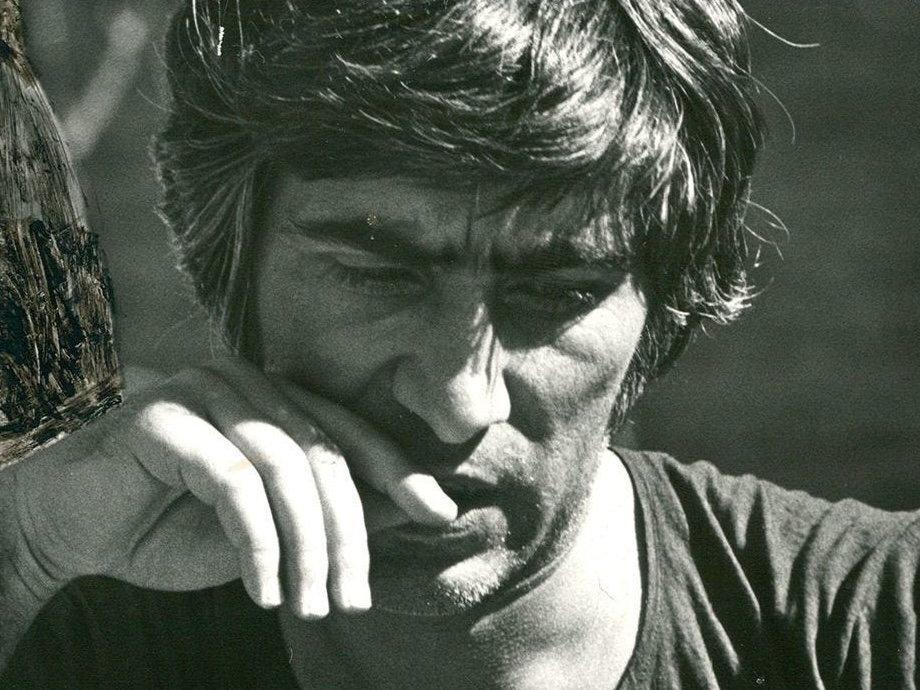
Bahram Beyzai (1938–2025), a prominent figure of Iranian cinema, passed away on 26 December. Beyzai, an Iranian playwright and theatre maker, screenwriter, editor, writer, and researcher in Persian literature and art, is often considered a pioneer of Cinema-ye Motafavet, the Iranian New Wave. Born into a family of poets, he was deeply rooted in Persian literature, myth, and ritual, first gaining renown as a playwright before turning to filmmaking in the 1970s. In 1972, he put himself on the map with Ragbār [Downpour], a film about a simple teacher who arrives in Tehran for a new job. When the film was restored by the Cineteca di Bologna in 2011, Martin Scorsese credited it with “the beauty of an ancient fable,” in which Beyzai’s background in Persian literature, theatre, and poetry is palpable. Beyzai avoided overt political messages, yet his films repeatedly set historical or mythic figures against oppressive religious and political systems. Often considered his greatest achievement, Bashu, gharibeye koochak [Bashu, the Little Stranger] (1986), was banned for years. In his theatre work as well, he drew inspiration from Indo-Iranian mythology and history, often beginning from his study of ancient Iranian literature and languages.
Gharibeh va Meh [The Stranger and the Fog] (1974), unwatchable for decades and one of the most remarkable discoveries at the Cinema Ritrovato festival in 2023, after the film’s original negatives were “smuggled” into Bologna, is a dreamlike work about an amnesiac outsider whose arrival unsettles a coastal village governed by fear and superstition. Beyzai’s most productive period unfolded under two regimes, the Shah’s monarchy and the Islamic Republic, both marked by censorship and suspicion. Forced into long periods of exclusion and silence, he nevertheless refused to abandon his artistic language or ethical convictions. As Jafar Panahi wrote in tribute, Beyzai taught generations of filmmakers “how to stand up to oblivion.” Ehsan Khoshbakht, co-director of Cinema Ritrovato, wrote a longer obituary for The Guardian, which you can read here.

